Panayiotis Moutis
October 2025
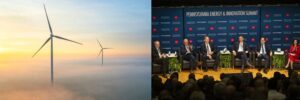
In the past few weeks the Climate Change AI Initiative introduced me to 2 reporters for input on the matter of the recent peaking interest in Artificial Intelligence (AI) and its effects to electrical grids and electricity markets.
Recent AI breakthroughs have meant the rampant growth of data center deployment and their load demand. For those unfamiliar with the topic, Machine Learning (ML), a branch of AI, requires training data to extract statistical mapping from certain types of input to patterns, knowledge or forecasting of trends or phenomena. At the current stage of ML development, the training data have become immense in size, hence, the meteoric increase in data centers and their electricity consumption. Even though, OpenAI, xAI and Meta blew open this Pandora’s Box in later 2022, there were signs that deep ML was leading us this was as early as 2020. I recall a panel I shared with utility C-suites saying that compared to 2-5% year-to-year throughout the 2010s, they have been updating their load growth outlooks by multiple folds in the early 2020s.
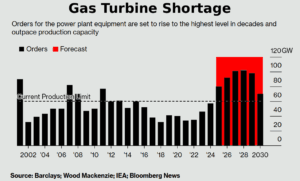
As I told Olivia Prusky from the PhillyDaily.com for her article “Is Pennsylvania ready to power the next industrial revolution with AI?“, I have not been surprised by Trump’s administration push for powering of this AI boom with fossil fuels. But I have been surprised by how Big Tech have had similar plans all along, even when they claimed otherwise (during the Biden administration). Which brings about my first concern: Big Tech buying all gas units they can get their hands on, means fewer procurement sources for utilities. In April ’25, FERC denied the Talon-Amazon agreement that would “strand” nuclear power exclusively for Amazon data center uses; granted, due to cost reasons, but the broader gist is unchanged. In a deregulated electricity market all assets should be competitively “contested”… When certain players can “hoard” all the gas generators (just because they know they will need it for their own immense load demand), we might be very well going down the road of supply shortfalls. In technical terms, brownouts and/or blackouts. A few analysts confirmed my fears just a few hours ago…
Albeit service interruptions are the improbable side-effect of the rise of AI, the climbing electricity costs are pretty much a certainty of the present reality. Throughout the northeastern US, as reported by the Washington Post, electricity bills have been increasing several units or dozens of units percent… Given this context, I was very careful when MIT Technology Review‘s Casey Crownhart‘s asked for my comments on whether AI can help the grid. When it comes to electricity prices, AI already “costs” more than it “benefits” the broader public. Wind, solar and load forecasting, expert systems, and image recognition (LiDAR-based vegetation monitoring near power lines) are not novel AI accomplishments that can justify the price tag we all have had to pay for the past few months.
Also, we have not yet seen what may happen under stressed economic conditions, a harsh winter or some widespread grid disruptions. Leading up to 2021, there were limited if no concerns at all regarding the affordability, reliability and resilience of the ERCOT grid. Come winter storm Uri, hundreds (maybe thousands?) of families were faced with massive bills due to lack of generating capacity during those cold-snap days. As the US electrical grid is not expanding at any efficient pace, new generation cannot connect in time and the existing generation is bottlenecked by grid congestions. The uphill of energy costs is only going to get steeper.
However, there is something that annoys me the most and I have not had the chance to express in either of the 2 articles that asked for my input. The US Energy Policy has been short-sighted by both the previous and the current Administrations. In my view, nothing is more indicative of failed major Energy Policy than legislating it through the budget reconciliation process. The grid does not suffer from “money” problems, but from framework problems; numerous and clunky permitting processes, legal battles, cost allocation, etc. Throwing money to favor certain technologies, analyses or roadmaps is not solving anything mentioned in the previous sentence.
I do not claim to have a solution to the market forces that are driving any liberalized sector of the economy – energy being one of them. However, FERC, NERC, EIA, the Dept. of Energy and several OUs within and beyond the cited authorities are tripping over NIMBY-isms, antiquated perspectives and slow learning curves. There are smart people, with novel ideas and bird’s eye-view of what is hurting the electricity sector. It is important to confer with these people and ask them how to best navigate the operating and economical nuances of the “largest machines in the world”. It is also important to allow/fund them to work on these problems and not put numerous obstacles in their way.