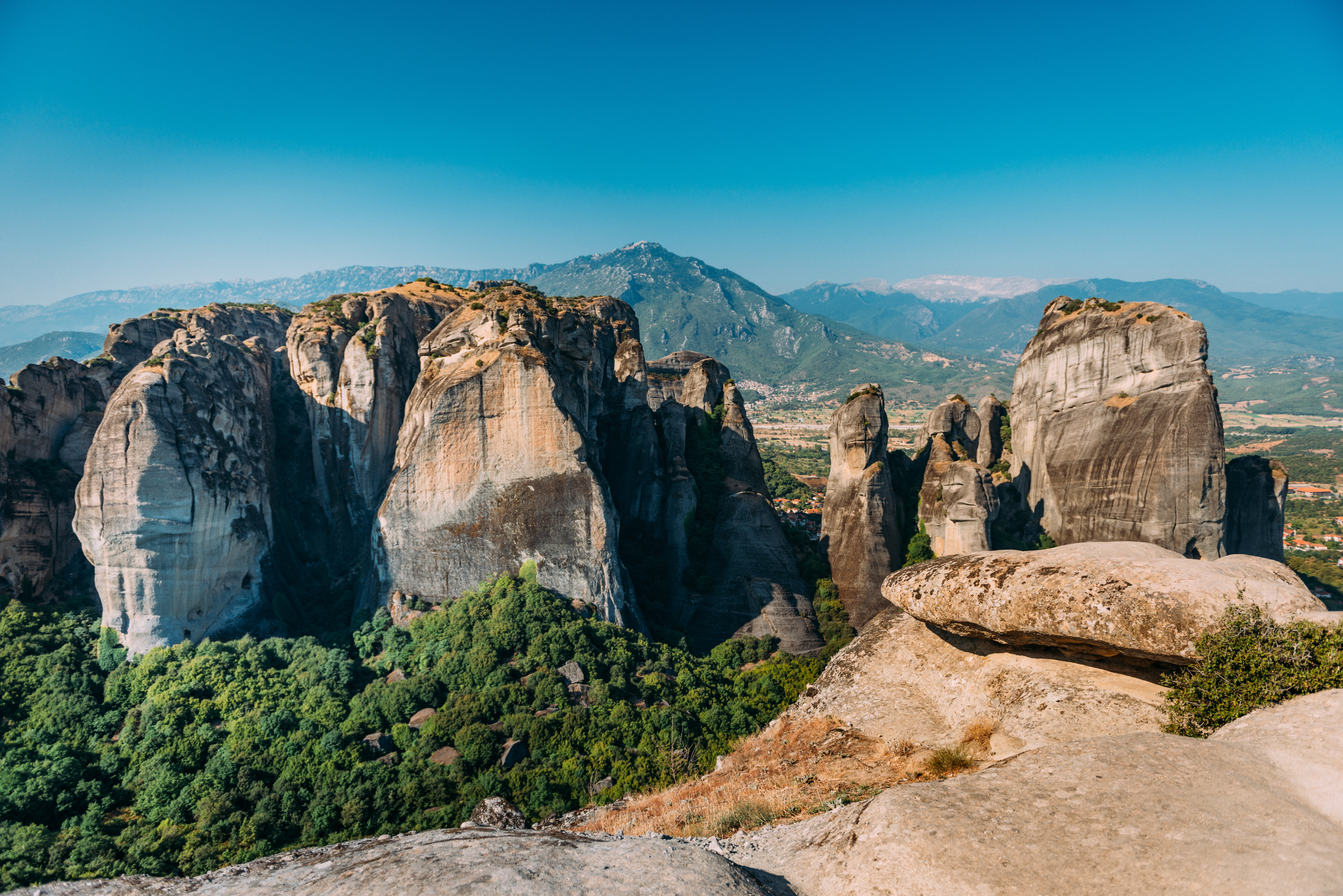
Greece - Winter 2027 Program
A Faculty-Led program by Dr. Angelo Lampousis, Earth and Atmospheric Sciences, City College of New York. This immersive field course introduces students to environmental monitoring methods applied to Mediterranean agricultural systems, with a focus on water stress, saltwater intrusion, olive cultivation, and agricultural sustainability in the Peloponnese. Students receive hands-on training in field sampling, environmental instrumentation, and data collection while investigating water and soil conditions affecting agricultural landscapes and engaging with research institutions, agricultural partners, and the cultural heritage of Laconia and Messinia.
Greece Environmental Fields Methods | January 9-24, 2027
Undergraduate EAS 45000 – Environmental Field Methods / Graduate EAS B9048 – Environmental Field Methods / EAS 47204 – Environmental Project / EAS 10900 – Sustainability of High Value Crops
CCNY's Greece Environmental Field Program returns in Winter 2027 as an immersive faculty-led program directed by Angelo Lampousis, Ph.D., of the Department of Earth & Atmospheric Sciences. The program introduces students to environmental monitoring methods applied to Mediterranean agricultural systems, with particular emphasis on water stress, saltwater intrusion, olive cultivation, and agricultural sustainability in a region increasingly affected by climate and water-resource challenges.
Students will receive hands-on training in field sampling techniques, environmental monitoring instrumentation, and data collection protocols in active agricultural landscapes. The academic program will be conducted primarily in Laconia and Messinia in the Peloponnese, where students will examine the relationships among groundwater and soil conditions, water availability and salinity, agricultural productivity, and environmental change. Field research will be complemented by visits to research institutions, olive-growing areas, olive oil facilities, and sites of major historical and cultural significance.
The program begins in Athens with visits to the Acropolis, Parthenon, and Acropolis Museum before traveling to the Peloponnese. Field activities will include environmental monitoring exercises addressing water stress and saltwater intrusion in agricultural areas, olive cultivation and harvesting practices, visits to olive mills and research facilities, and exposure to olive oil sensory evaluation. Cultural components include Sparta, Mystras, Mani, Dyros, Monemvasia, Ancient Messene, and other significant landscapes and archaeological sites.
Program coordination is supported with the assistance of the American Farm School and the Perrotis College Study Abroad Office in Thessaloniki, whose collaboration helps facilitate the program's academic and logistical activities in Greece.
Week 1 - Sparta & Laconia | January 9 -17
The first week centers on Sparta and the Laconia region, in collaboration with MOLON LAVE, and combines intensive field training in olive-growing landscapes with an introduction to the region's agricultural and cultural heritage.
Students will participate in multiple days of fieldwork focused on environmental monitoring, water stress, soil and water conditions, and olive cultivation, beginning with program orientation and a visit to the Museum of the Olive and Greek Olive Oil in Sparta. The week also includes exploration of Mystras, Mani, Dyros, and Monemvasia, connecting contemporary environmental and agricultural challenges with the distinctive geography and cultural history of the southern Peloponnese.
Week 2 - Messinia & Costa Navarino | January 18–22
The second week moves to Messinia and the Costa Navarino region, with activities centered around the Navarino Environmental Observatory (NEO) and the Kalamata/Messinia agricultural landscape.
Students will undertake additional environmental fieldwork with particular attention to water scarcity, groundwater conditions, salinity and saltwater intrusion, and their implications for Mediterranean agriculture and olive cultivation. Engagement with researchers and professionals will place these observations within the broader context of climate change, Mediterranean ecosystems, water-resource management, and sustainable land use.
The program will also include a visit to ELGO-DIMITRA's Institute of Olive Tree, Subtropical Crops & Viticulture – Department of Olive & Horticultural Crops, providing students with exposure to applied research related to olive cultivation and Mediterranean agriculture.
The academic field program concludes with a visit to Ancient Messene before returning to Athens for departure to New York.
Important Dates
- Deadline for all Application Materials: October 1, 2026
- Interview with Study Abroad: October 22, 2026
- Pre-Departure Orientation: November 6, 2026 @ 2:00 pm
- Deadline for payment of Program costs - November 6, 2026
Disclaimer: All dates are subject to change and will be confirmed later.
Costs
- Application fee: $300
- CUNY tuition: 3 credits ($305 or higher per credit)
- Program cost: $1,200.00
- Airfare: $800 (estimated)
 Connect

 Connect



Last Updated: 09/30/2026 18:25